
Introduction
It’s harder than ever to get fit in this fast-moving world. Many people spend long hours sitting at desks, working on computers, using smartphones and juggling busy schedules that leave little time for physical activity.
This results in problems such as obesity, stress, poor sleep, low energy and diseases related to lifestyle becoming more and more common.
Fitness is not the muscular body, the weight loss or the way you look. Benefits of fitness is being physically strong, mentally well, emotionally stable, and having the energy and confidence to do your everyday activities.
Exercise can improve heart health, build muscle and bone strength, improve brain function, relieve stress, increase confidence and help people live longer, healthier lives.
Whether you’re a beginner setting out on your first workout routine, an athlete looking to improve your performance, or a person just looking to feel better every day, fitness can change your life in so many ways.
Fitness is not a place you arrive at. It is an investment for a lifetime in your health, happiness and future life quality.

Benefits of Mental Health and Fitness
Physical fitness is more than simply having a stronger body. One of the greatest benefits of fitness is its capacity to improve mental health.
Modern lifestyles are characterized by constant pressure, work demands, financial worries, social challenges, and information overload. Such things can lead to stress, anxiety, bad mood and emotional fatigue.
Regular physical activity is a natural way to enhance psychological well-being. Moving your body causes your brain to release chemicals that help to promote good feelings and mental stability.
1. Reduces Stress and Anxiety
Stress is a part of life at this time. A little stress can be good but long-term stress can be bad for your physical and mental health.
Physical activity reduces stress thru its actions on various systems in the body.
The body produces during exercise:
• Endorphins to elevate mood and produce a sense of calm
• Dopamine increases motivation and pleasure
• Serotonin – regulates emotions
Exercise also cuts the levels of stress hormones like cortisol.
Some activities that may help relieve stress include:
• Take a walk
• Yoga
• Swimming (October 2023)A 20-minute workout will help clear your mind and put you in the right emotional state.
Fitness is a healthy way to deal with the stress of everyday life, instead of unhealthy coping mechanisms.
2. Increases Mood and Happiness
One of the best benefits of fitness is a better mood. Those who exercise regularly tend to have:
• Adopting a more positive outlook
• Increased confidence
• More emotional stability
• Reduced frustration
Exercise activates areas of the brain that govern pleasure and emotion.
This is why many people say they feel refreshed and lighter in the head after a workout.
Fitness doesn’t fix all of life’s problems, but it does make you better able to deal with them.
3. Assists in Managing Depression Symptoms
Research has shown that regular physical activity is good for your mental health and can even reduce the severity of depression.
Exercise benefits mental health:
More brain action
Boost of self-confidence
Activities in groups for socializing
Better sleep patterns
Greater sense of achievement
For some, exercise can be an important part of an overall mental health strategy that includes support from professionals when needed.
Simple things like walking every day can give you meaningful benefits.
Disease Prevention and Fitness
One of the most important benefits of fitness is that it lowers the risk of many chronic diseases.
Sedentary lifestyle increases health risks. Better working of the body can be achieved with regular physical activity.
1. Exercise and Preventing Heart Disease
heart disease remains one of the world’s biggest health problems.
Exercise helps your heart by:
• Improved blood circulation
• Heart muscle strengthening
* Lowering blood pressure
• Better cholesterol balance
Things like walking, cycling, swimming and other heart activities are especially good for you.
2. Fitness and Diabetes Management
Physical activity is important in controlling blood sugar levels.
Exercise helps the body use glucose more effectively and improves the body's response to insulin.
The advantages are:
• Improved blood sugar control
• Metabolism Boosting
• Lower risk of developing type 2 diabetes
A well-balanced diet with the addition of exercise is a great foundation for metabolic health.
3. Fitness & Obesity Prevention
Obesity is a complicated condition with many contributing factors including diet, genetics, environment and lifestyle.
Regular physical activity helps you to:
• more calorie burn
• Metabolism improvement
• Gain lean muscle mass
• Supporting healthy weight management Fitness is a lifestyle not a quick fix to lose weight.
4. High blood pressure and physical fitness
Exercise increases cardiovascular efficiency and helps to maintain blood pressure in the healthy ranges.
Regular physical activity keeps your blood vessels working properly and relieves pressure on your heart.
Activities Such as:
• Riding a bicycle
• Swimming.
• Moderate strength training can help to control blood pressure.
Brain Health and Fitness the Effects of Exercise on Brain Function
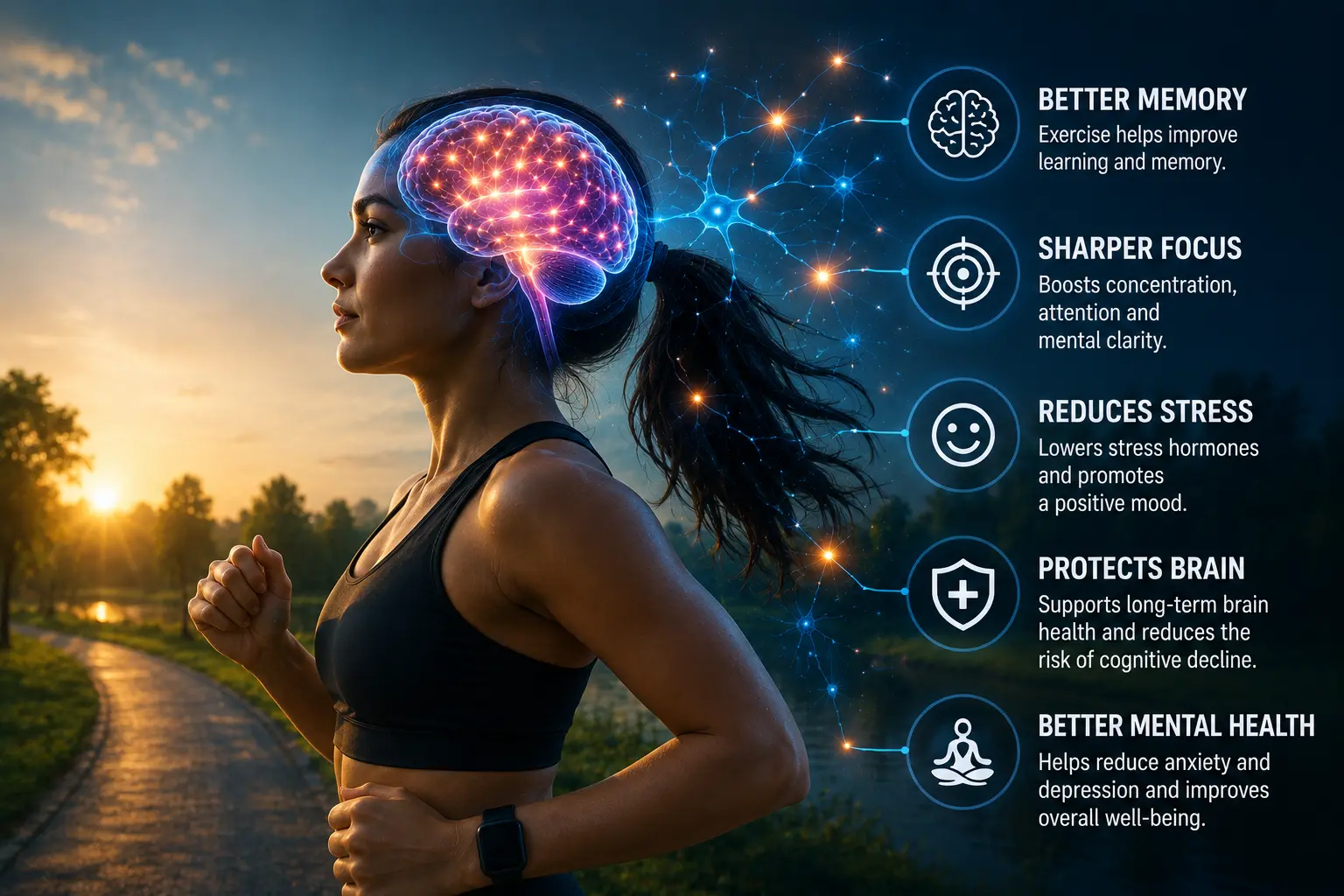
Many people think of fitness only as a way to look good, build muscles or lose weight. But one of the greatest and most underappreciated benefits of fitness is what it does to your brain.
The brain needs the proper blood circulation, oxygen, nutrients and stimulation to work properly. Regular physical activity stimulates these processes and maintains mental performance throughout life.
A healthy body gives the brain a better environment in which to function.
1. Improves memory and learning ability
Exercise helps parts of the brain responsible for memory and learning.
Exercise causes the release of chemicals that help keep the brain healthy and also helps to develop new neural connections.
Physical activity may improve:
• Short-term working memory
• Memory (long term)
• Ability to learn.
• Information management
• Mental acuity
There is evidence that physical activity benefits students, professionals and older adults to perform better cognitively.
2. Better Concentration & Focus
Today’s lifestyle is full of distractions with technology, social media and multi-tasking.
Exercise improves blood flow to the brain and reduces mental fatigue, which enhances concentration.
Many people have after physical activity:
• Better concentration
• Clearer thinking
• Increased productivity
• Greater mental energy
A brief walk or a quick workout can recharge an intense day.
3. Supports healthy brain aging
Aging naturally affects brain health, but an active lifestyle can safeguard cognitive health.
Fitness helps you age well by:
•Enhancing blood circulation
• Reduction of inflammation
• Independence is maintained
Walking, strength training, swimming, and balance exercises are especially good for older adults.
4. Enhances Creativity and Problem Solving
Exercise can be good for the memory, but it can also be good for creative thinking.
Exercise helps many people think of better ideas and solve problems more effectively because:
• Minimize mental fatigue
• Improve mood
• Boost brain activity Some professionals take walks or work out to generate new ideas.
Fitness & Productivity: How Exercise Improves You Every Day
It is a common fallacy that exercise takes precious minutes away.
Fitness actually can increase productivity by increasing physical and mental performance.
People who follow a regular fitness routine often say they do better in work, their studies and their daily chores.
1. boosting your energy every day
Not having enough energy is often caused by inactivity, poor sleep, stress and unhealthy lifestyle habits.
Physical activity regular boosts energy by:
• Cardiovascular system improvement• Improved oxygen supply
• Improved physical stamina
• Improved sleep support
A body that’s more fit takes less work to accomplish the things that need to be done for daily living.
2. Better Job Performance
Fitness can have a positive effect on work performance.
Regular physical activity can help to improve: Concentrate on your job
• Stress management
• Decision-making skills
• Rewards
• Confidence People who lead active lifestyles are better able to deal with busy schedules.
3. Creates Consistency & Discipline
Fitness gives your life skills.
For a successful fitness journey, you need to:
• Have patience
• Establish goals
These habits often spill over into other areas of life, such as career development and personal growth.
4. Improves Time Management
Those who exercise regularly tend to be better at planning their schedules.
Why You Should Plan Fitness into Your Life Here’s why:
• Planning
• Prioritization
• Routine development
Regular fitness can improve overall lifestyle management.

Benefits of Fitness FAQs
1. What are the benefits of fitness?
The main benefits of fitness include:
* Better physical health
* Greater muscle strength
* Improved heart function
* Higher energy levels
* Better mental well-being
* Improved sleep
* Weight management and a lower risk of chronic disease.
Regular physical activity makes the body and mind function efficiently and leads to a healthy life.
2. Why do we need fitness in our daily life?
It is important because it makes everyday things easier for the body.
A fit person will generally have:
• Increased power
• Increased power
• Improved mobility
• Increased stamina
• Better stress management
Exercise helps people perform their daily activities with less tiredness and more confidence.
3. How often should I work out to get more fit?
Most adults should have some exercise each week.
One possible middle of the road approach might be:
• moderate cardiovascular exercise several days per week
• Exercise regularly to gain strength
• exercises to increase mobility and flexibility
The best routine will depend on your goals, your health status, your age and your fitness level Consistency is all.
4. Does fitness help mental health?
All right. Physical activity is good for the brain.
Physical activity can help to:
• Elevate mood
• Show more confidence
• Improve emotional stability
• Get better sleep
When you are active your brain makes good feeling chemicals.
5. Does Working Out Make You Lose Weight?
If you want to lose weight fitness can help you burn more calories and boost your metabolism and build muscle.
But sustainable weight management is a blend of:
• Stay mobile
• Correct nutrition
• Sleep well at nite
You can’t outrun a bad diet.
6. What is the best exercise to get in shape?
There is no one best exercise for everyone.
The best fitness program is one which involves different kinds of activities like;• Cardiovascular endurance
• Muscles and bones get stronger
• Expansion of mobility
* Balance stability exercises
The best exercise is the one you will do, because it fits your goals and you like it enough to do it.
7. How soon will I see results?
Results are different for everyone and take time.
What is progress is determined by:
• Fitness level at baseline
• How frequently do you exercise
• Foodstuff
• Diet
• Chill out
• Inherited genetics
• Level of physical activity
Some benefits are immediate, such as feeling better and having more energy. But it takes weeks or months before you see physical changes if you do the right things constantly.
8. Fitness is Important in Old Age
Yes. Older adults should keep fit; it is very important.
Regular physical activity helps to maintain:
• Maximum muscle strength
• On the move
• The health of the bones
• Independence Staying active as we age can improve our physical and mental quality of life.
9. How to get fit without going to a gym?
Yes. “There are many forms of fitness that are effective and require little to no equipment.
A few examples are:
• Jogging
• Exercises using your own body weight
• Yoga.
• Walking and cycling transport
• Work out at home No need to go to a gym. The trick is to get up and walk a lot.
10. What happens if I stop working out?
When you cease exercising for a lengthy period of time, the body slowly begins to lose some of the fitness adaptations.
Possible effects:
• Reduced strength
decreased stamina
• Lower power consumption
• Loss of muscle
• Absence of movement
But as you get back to normal activity, you'll get your fitness back slowly.

Conclusion: Making Fitness a Priority in Life
Fitness offers benefits that go far beyond just how you look. Fitness builds the body, builds the mind, and helps to build a healthier lifestyle.
Exercise is good for your heart and makes you stronger. It helps your mental health and brain function and helps protect you from many health problems.
The road to fitness is not paved with perfection. It takes dedication and consistency.
Small things cause big things:
• Daily walking
• Making better food choices
• Exercising regularly
• Having enough sleep
• Relocating during the day
Every step is a step to better health.
Fitness is not a short-term goal or a short-term challenge. It’s a practice that makes you better, stronger, healthier, more able.
Prioritize your fitness today. Invest in a healthier tomorrow.